
How to Search for a Warrant in Ottawa County
Ottawa County posts no public Sheriff warrant search, so a court is where the work begins. The 58th District Court handles misdemeanor, traffic, and civil-infraction cases from three counters. The 20th Circuit Court holds felony files after a preliminary examination. The Friend of the Court handles child-support enforcement. Before you start, gather the full legal name from the case paperwork, the date of birth, and the ticket or case number.
- Open the Michigan MiCOURT case search and look for a public docket lead by name, case number, or court.
- If the document is a ticket, use the Ottawa County civil-infraction lookup with the last name and the printed ticket year and number.
- Match the case to the 58th District Court location that holds it, then call that clerk and ask about warrant status.
- For a felony, contact the 20th Circuit Court records office. For child support, call the Friend of the Court case line.
- If a search comes back blank, file a narrow records request through the county FOIA portal and ask which court issued the case.
Note: A public hit is only a lead; the issuing court alone can confirm an Ottawa County warrant's status today.
Three Ottawa County Warrant Counters
One District Court serves all of Ottawa County, yet venue decides which counter picks up. The address printed on the ticket or case notice controls. Each of the three locations keeps its own criminal and traffic contacts.
| Counter | Address | Main Phone | Criminal and Traffic Email |
|---|---|---|---|
| Grand Haven | 414 Washington Ave, Grand Haven, MI 49417 | (616) 846-8280 | ghcrim@miottawa.org and ghtraffic@miottawa.org |
| Holland | 85 West 8th St, Holland, MI 49423 | (616) 392-6991 | holcrim@miottawa.org and holtraffic@miottawa.org |
| Hudsonville | 3100 Port Sheldon Rd, Hudsonville, MI 49426 | (616) 662-3100 | hudcrim@miottawa.org and hudtraffic@miottawa.org |
The 58th District hours and locations page gives each address its own phone line and posted hours. Call the wrong counter, and an Ottawa County warrant question stalls.
Ottawa County Warrant Search Fields
Each public tool wants different fields. MiCOURT runs on case and party identifiers. The civil-infraction search runs on a ticket. The District payment search won't start without a date of birth, so match the Ottawa County tool to the paper in hand.
| Field Label | Type | Required | Notes |
|---|---|---|---|
| Last or business name | Text | One qualifying identifier | The ticket lookup accepts a personal last name or a business name |
| Ticket year | Text | Pairs with the ticket number | Two-digit year portion of the printed number |
| Ticket number | Text | Pairs with the ticket year | Four to six digits, entered as printed |
| First and last name | Text | Both required | Used by the District Court payment search, not the ticket lookup |
| Date of birth | Date | Required | Narrows the payment search to one person |
The ticket side asks for its own details. The Ottawa County civil-infraction lookup will not run until you enter a last or business name, a ticket year, and a ticket number.
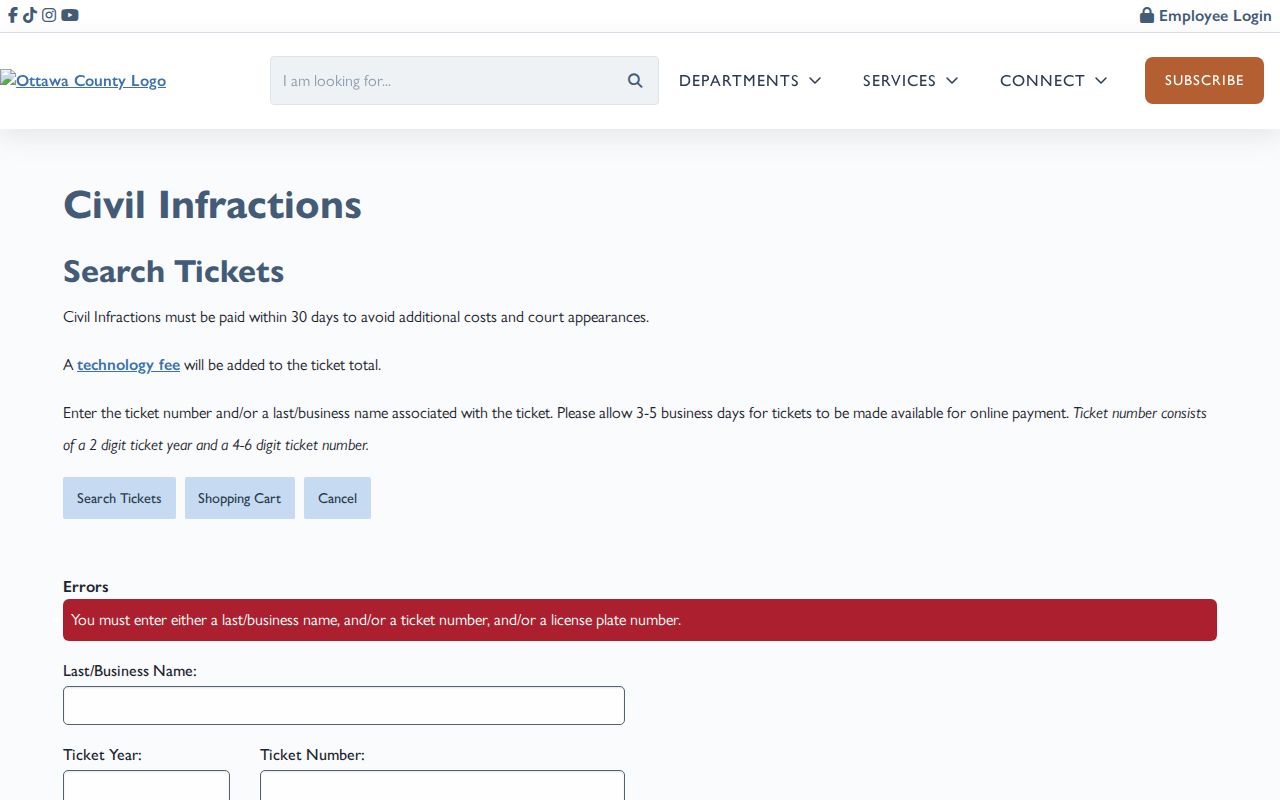
Read the notice beside the boxes, not just the boxes. A ticket can take three to five business days to show online. The 30-day window runs from the date printed on the citation, an Ottawa County rule worth watching.
Ottawa County Warrant Matching: Number Before Name
A name alone mostly produces noise. Common surnames in Ottawa County pull back more than one record, and a partial match can point at the wrong person entirely. Lead with the number you already hold. Ottawa ticket numbers use a two-digit year plus four to six digits, so the year narrows things before anyone reads the name. A case number beats that, since it belongs to a single docket in a single court. When all you have is a name, ask the clerk to compare the date of birth before any status gets discussed.
What an Ottawa County Warrant Search Returns
A public search hands you a lead, not a warrant card. Read the issuing court first, since that office controls the status, then the case identifier and the latest docket event.
| Case or ticket identifier | The matching key, shown as YY-##### on an Ottawa ticket. |
|---|---|
| Charge or case type | The official label from the court file, not a shorthand code. |
| Issuing court | 58th District Court, 20th Circuit Court, the Family Division, or a federal court. |
| Bond or release instruction | Set case by case. Ottawa publishes no universal warrant bond figure. |
| Status | Active, served, recalled, quashed, or closed, per the court record. |
What a Blank Ottawa County Warrant Result Means
A blank result is the most misread outcome of the whole process. MiCOURT says on its own site that the public search is informational and the court record controls. Records lag behind events. A warrant entered yesterday may not post today, a recalled warrant can linger in a cached result, and a sealed or juvenile matter never appears at all. A docket entry also says nothing about a case that moved to another court. Note: A clear screen is a starting point, not proof that no warrant exists, so ask the issuing court to read the docket.
Where Ottawa County Warrants Are Checked
Each office holds one piece of the Ottawa County picture. The Sheriff serves process and keeps custody records. The District Court holds misdemeanor and traffic dockets, the Circuit Court holds felony and post-bindover files, and the Friend of the Court handles support enforcement. City police are a different matter. Ottawa County police departments keep incident reports, not warrant status, with Holland, Grand Haven, and Zeeland each running their own agency while Hudsonville and Coopersville contract with the Sheriff. A police records request won't tell you whether a court warrant is open, and it can't replace the clerk's answer.
Statewide Warrant Systems Ottawa County Lacks
Michigan publishes no public warrant index, and the state case search shows why that distinction matters. The statewide MiCOURT case search is a strong lead. Its own notice tells you to contact the court for the official record, which in Ottawa County is the rule to follow.
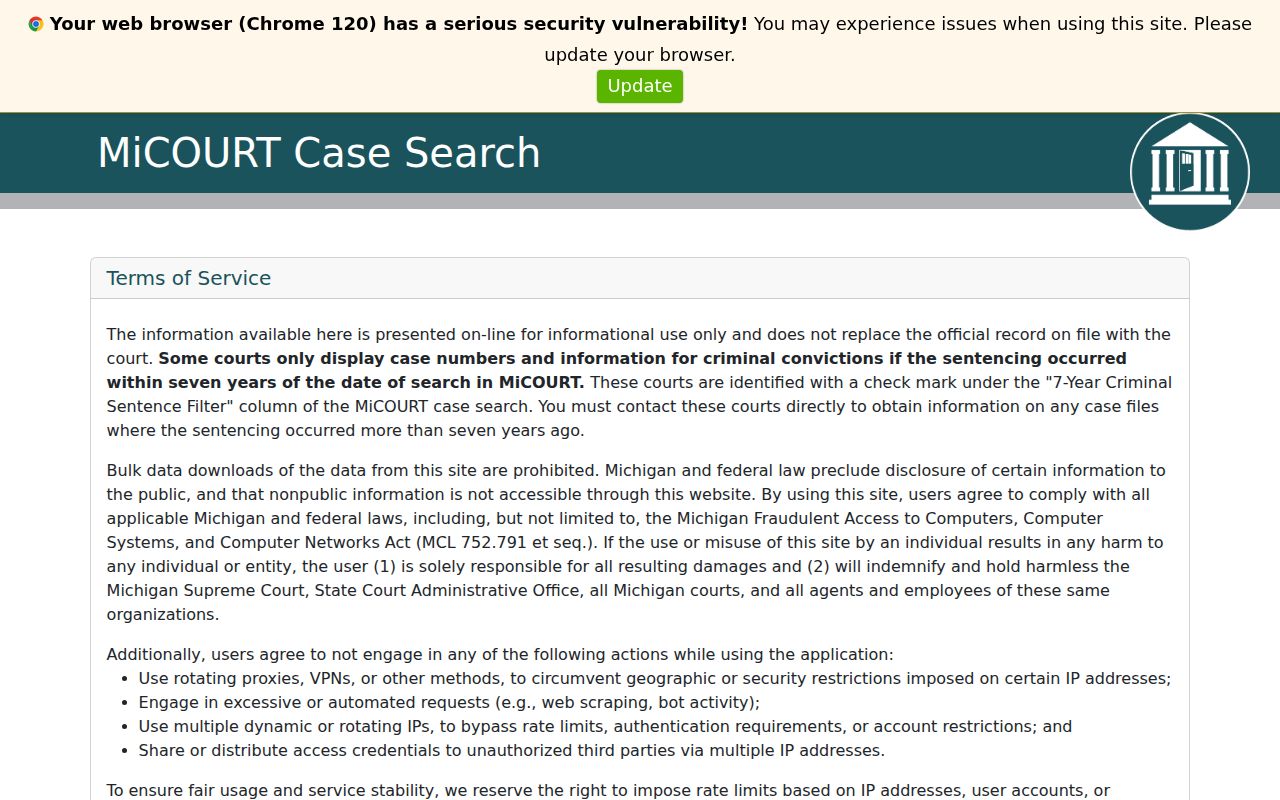
LEIN, the law-enforcement network, stays closed to the public, and the Michigan State Police criminal-history product leaves out warrant information. A federal case changes the route again. Federal dockets run through PACER and the U.S. Marshals Service, not any Ottawa County system. That access has its own gate: the Western District of Michigan public-access notice covers dockets from 1992 forward and the documents that stay restricted.
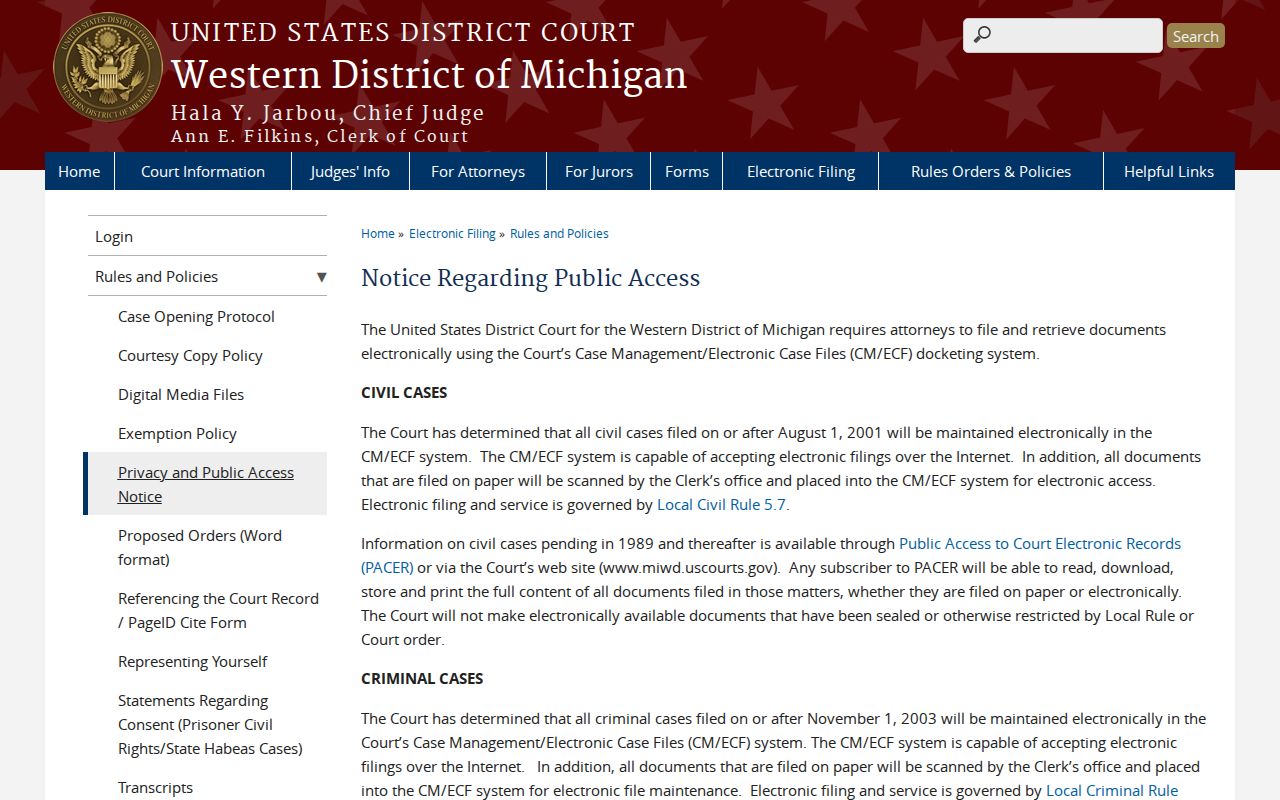
A PACER result answers a federal question only. It can't stand in for an Ottawa County court record or the sheriff's confirmation.
Access and Restricted Warrants in Ottawa County
Court access is real but partial. Michigan records law reaches county and city files, and court rules govern what a docket shows. Some Ottawa County matters stay out of a public search on purpose.
Key Rules:
Sealed records do not appear in any public search, and court staff cannot confirm what an order seals.
Family Division and juvenile files are restricted under MCL 712A.28, so they are not an adult warrant source.
A warrant can be withheld until it is served, and MCR Chapter 8 keeps protected identifiers out of the public file.
FOIA Requests for Ottawa County Warrant Records
The FOIA route is the fallback when a warrant search comes up empty. Ottawa County routes online records requests through its FOIA portal, where a login screen greets anyone without an account. Registration comes first.
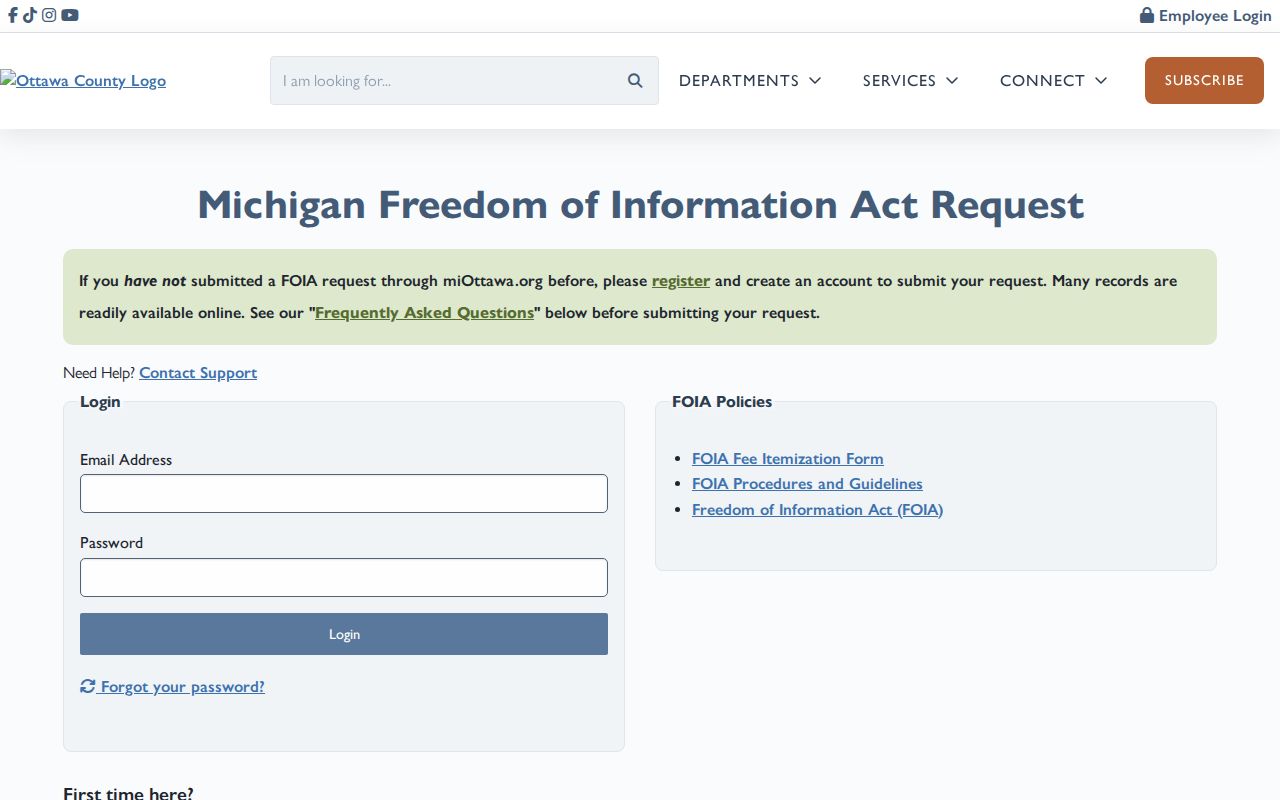
Keep any FOIA request tight. Ask for a single policy, a short date range, or one case record rather than every Ottawa County warrant at once, since narrow requests move faster. The county posts its current itemization and policy documents on the portal, and those pages spell out the fees.
Search, Confirm, Then Resolve
A search only counts when it ends in confirmation and a next step. Work the steps below for Ottawa County, and jot down each call you make.
- Write down the court, the case or ticket number, and the clerk's name and date on every call.
- Ask the clerk to read the current status from the docket, not from a public website.
- Ask what the court requires next: an appearance, a payment, bond, or a motion to recall.
- Talk to an attorney before an appearance, and keep every receipt and order.